Deep-dives on brand growth, digital marketing, analytics, paid media, and everything in between.
Running campaigns on Display & Video 360 (DV360) can be a great way to connect with your desired audience and achieve your marketing goals. However, just like any digital advertising platform, DV360 campaigns can sometimes run into issues that affect how well they perform.
In the dynamic world of digital analytics, the ability to understand and track user interactions across various touchpoints is paramount. Google Analytics 4 (GA4) introduces a powerful feature called User ID, offering businesses a way to unify user data and gain deeper insights into user behavior. In this comprehensive guide, we will delve into the intricacies of User ID in GA4, exploring its significance, implementation, and the transformative impact it can have on analytics.
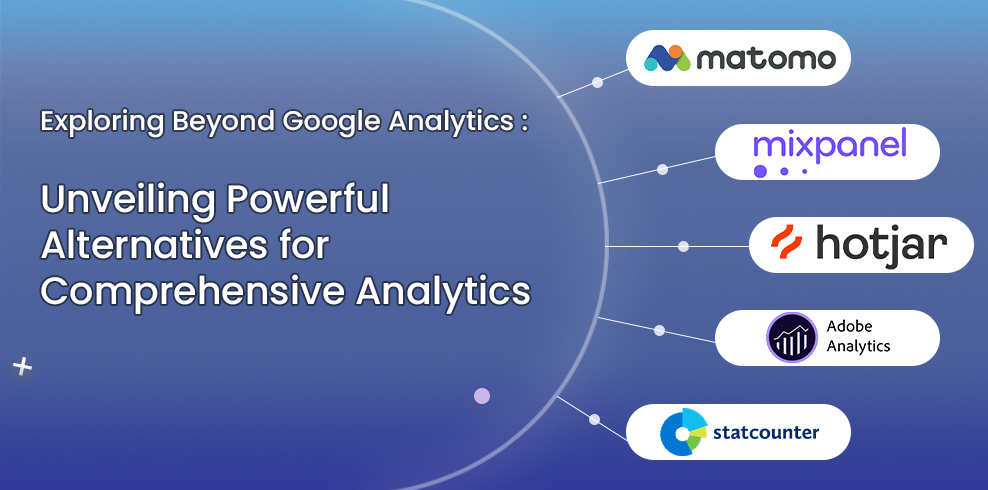
Google Analytics has long been a cornerstone for businesses and website owners seeking insights into user behavior, traffic sources, and overall website performance. However, in an era where data privacy concerns are escalating, and diverse business needs demand more specialized analytics, exploring alternatives to Google Analytics has become a prudent strategy. In this comprehensive blog, we will delve into a range of robust alternatives, each offering unique features and advantages that cater to specific analytical requirements.
Choosing between a 7-day click and a 1-day click attribution setting depends on the specific goals and characteristics of the advertising campaign. Advertisers need to consider the nature of their products or services, the typical customer journey, and their preference for immediate versus more comprehensive insights.
Ever felt lost in the world of online ads? It's like trying to find your way through a maze! But Fear Not, there's a helpful technique for Narrowing Down Targeting which leads to Strengthen the Display and video 360 Campaign Optimisation. Think of it as a map guiding you to spend your ad budget wisely and hit your goals. It gives you tips on how to make your ads perform better.
Running ads campaigns for your mobile app is an excellent way to drive user engagement, boost downloads, and increase revenue. However, to ensure the success of your campaign, it is crucial to track your app conversions effectively. In this blog, we'll explore various tracking methods, identify the best alternative, and highlight common mistakes people make in this process.
The transition from Universal Analytics (UA) to Google Analytics 4 (GA4) has been both exciting and, at times, bewildering for marketers. One of the mysteries that GA4 introduced is "data thresholding." This concept has left many scratching their heads, unsure of how it works and what it means for their data. In this blog, we aim to demystify data thresholding, providing you with a clear understanding and enabling you to make more informed decisions about your business's analytics.
In an era where data privacy is paramount, businesses must prioritize the responsible and ethical handling of user information. Google Analytics 4 (GA4) and Google Tag Manager (GTM) emerge as critical tools for organizations seeking to enhance user privacy compliance while still extracting valuable insights. This blog will delve into the strategies and best practices for implementing GA4 and GTM in a way that aligns with user privacy regulations and fosters trust with your audience.
Picture Google Analytics 4 (GA4) as a super-smart friend who uses Artificial Intelligence (AI) to help you understand your data better. It's like having a super detective for your business data, pointing out things you might have missed.
Obtaining data from the user interface of Google Analytics 4 (GA4) according to your specific requirements can be quite challenging and sometimes even impossible. However, by utilizing dashboard BI tools, we can create customized dashboards using BigQuery as a data source.
The GDPR Cookie consent is required by law in many jurisdictions, Started from the European Union, United States, and to the globe. It is the process of obtaining users' permission before storing their data, which can be used later for personalized Advertising. The General Data Protection Regulation (GDPR) in the EU requires websites to obtain explicit consent from users before setting any non-essential cookies. Cookies can also be used for various purposes, like tracking user preferences, remembering login information, retargeting them via Ads platform, and collecting analytics data.
In today’s digital first world, many advertisers prefer to use Google's default retargeting approach for ad personalization, making it less unique. Everyone values content that is distinctive, imaginative, and tailored to their preferences, right? Lets learn how it can be achieved through this article